
Reviewed · WALKING TOURS
Paris – Historic City Center Walking Tour
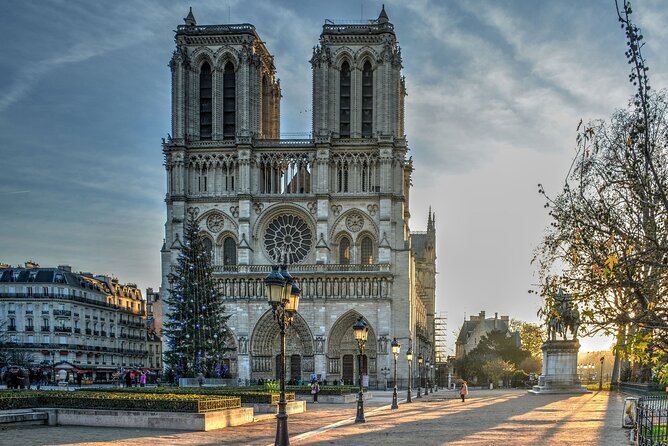
Paris has layers, and this walk finds them fast. I love how the route starts on Île de la Cité, the real heart of old Paris, and you feel the city’s timeline immediately. I also love the way the guide tells the Notre-Dame story, from construction in 1163 to the 2019 fire and what came after.
One drawback to plan for: it is an active 2 hours 30 minutes at walking pace, so comfy shoes are not optional.
In This Review
- Key highlights
- Why this tour works so well in the Paris historic center
- Starting on Île de la Cité, where Paris began
- Notre-Dame de Paris: construction, revolution, and the 2019 fire
- Fontaine Saint-Michel and Pont Saint-Michel: the Paris you miss alone
- Place Dauphine and Henri IV: royal Paris at street level
- Pont Neuf and the “secrets” feeling of old bridges
- Louvre orientation without the museum line
- Arc de Triomphe du Carrousel and the Napoleon theme
- Tuileries Gardens: statues, fountains, and that Versailles-style planning
- Eiffel Tower views and Gustave Eiffel’s 1889 construction story
- How the guide quality shows up in real life
- Price and value: is $156.01 worth it?
- Timing, meeting point, and how to plan your day
- Should you book this Paris historic city center walk?
- FAQ
- How long is the Paris Historic City Center Walking Tour?
- Where does the tour start and end?
- Is this tour private?
- Does the tour include entry to the Louvre Museum?
- What language is the tour offered in?
- Are entrance fees included for the stops?
- Is there pickup or drop-off included?
- Is the meeting area near public transportation?
- Are service animals allowed?
- What is the cancellation policy?
Key highlights
- Île de la Cité start gives you a true center-of-Paris feel right from the first minutes
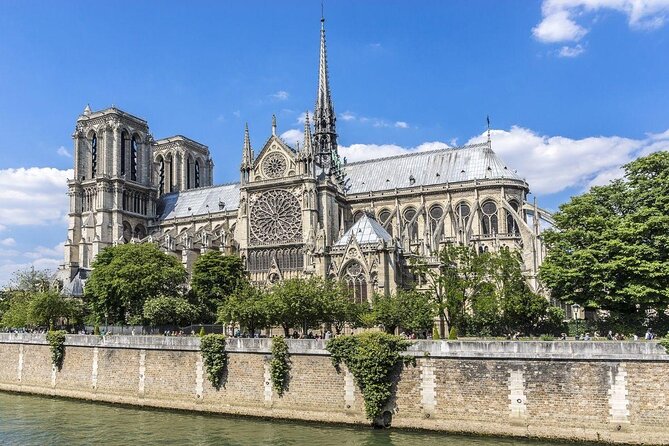
- Notre-Dame narrative connects medieval building work, the French Revolution, and Napoleon’s coronation
- War scars on Pont Saint-Michel explains why Paris did not face total destruction in WWII
- Royal squares and bridges includes Place Dauphine, Pont Neuf, and Henri IV statue views over the Seine
- No Louvre entry but you still get orientation, key names, and glass pyramid views
- Tuileries to Eiffel Tower payoff brings big city views without a long commute
Why this tour works so well in the Paris historic center
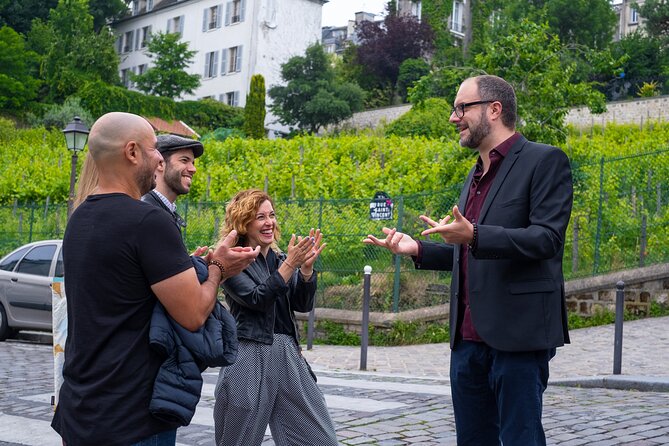
If you only have a short window in Paris, the hardest part is deciding what to see first. This route does that thinking for you. You start on the island that shaped early Paris, then thread your way through the bridges and royal landmarks that people still use every day.
The best part is that the sites are close enough to keep your brain connected. You are not jumping around the city, so history feels like one continuous story. And because the guide is certified and the tour is in English, you get clear explanations without needing to piece everything together yourself.
More Paris walks on the list
Starting on Île de la Cité, where Paris began
Your tour kicks off on Île de la Cité, an island tied to the Parisii tribe, long before Romans and long before today’s Paris. The setting matters. This is not a random “nearby” stop, it is where the story of the city’s center starts.
You learn how the island shifted from local temples to Roman influence, which gives you a useful mental map. It helps later when you see bridges and churches and realize they are not isolated monuments. They are part of one geography that kept pulling power and people toward the same few streets.
Because this first stop is short, you can also use it to set expectations. If you arrive a little early, take a moment to look around before the walking starts. That way, when the guide connects details, it lands faster.
Notre-Dame de Paris: construction, revolution, and the 2019 fire
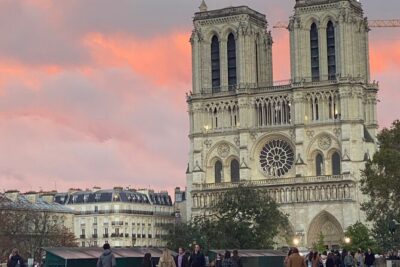
Notre-Dame is the big headline, but the tour keeps it grounded. The guide walks you through the cathedral’s arc, starting with construction in 1163 and continuing through the major turning points people often only hear about in fragments.
You get historical context that goes beyond architecture talk. The story includes the French Revolution and Napoleon’s coronation, which helps you understand why the cathedral matters politically, not just aesthetically. Then the tour brings you to the 2019 fire and what that event meant for the city and its identity.
You will likely look at the façade and feel like you are reading it. That is what you want from a first-time Paris visit. With a guide, the stones stop feeling random.
Tip: keep your phone camera ready, but also keep your eyes up. The guide’s explanation makes the wider view and the details both more meaningful.
Fontaine Saint-Michel and Pont Saint-Michel: the Paris you miss alone
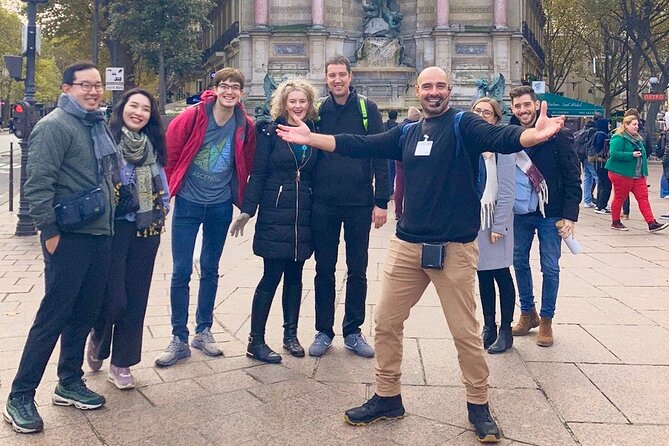
From Notre-Dame, you shift to the calmer rhythm of fountains and bridges. The stop at Fontaine Saint-Michel connects to the grand reconstruction story, when Paris reshaped itself and added new public landmarks. It is a nice reset after the weight of the cathedral.
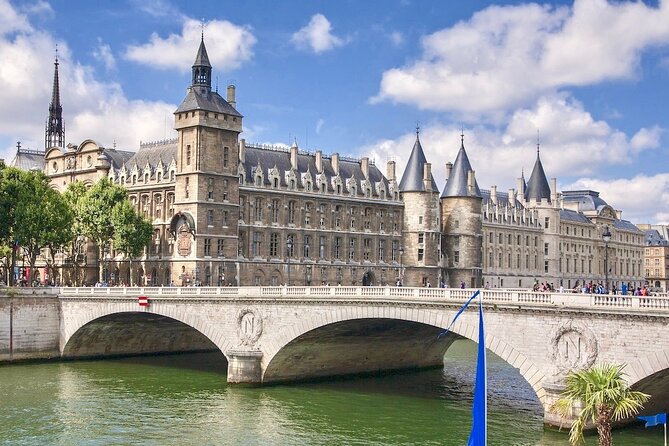
Then comes Pont Saint-Michel, and this is where the tour gets extra memorable. You do not just see a beautiful bridge, you learn about the bullet holes and why they are still there. The guide also shares the reason Paris was not destroyed during WWII, which reframes what you might assume about that era.
This kind of stop is valuable because it teaches you to notice signs of the past without needing to hunt for them. Walking tours like this turn everyday streets into a living history lesson.
Place Dauphine and Henri IV: royal Paris at street level
Next you get Place Dauphine, a charming square that is one of the earliest projects built by Henri IV. The reason I like this stop is simple. It gives you a breather while still staying in the center of the story.
The square’s restaurant scene is mentioned for a reason. After 1.5 to 2 hours of walking, you will probably start thinking about lunch. Place Dauphine is a reasonable place to pause, and the atmosphere feels more like a neighborhood square than a tourist stamp.
From there you move to the equestrian statue of Henri IV, with views over the Seine. The guide explains Henri IV’s short but meaningful reign, and you begin to see how often Paris linked power, river access, and public visibility. It is not just a statue moment, it becomes a way to understand the city’s priorities.
Pont Neuf and the “secrets” feeling of old bridges
Pont Neuf is the oldest bridge in Paris, and you get it at exactly the right moment: after you have already learned how much bridges mattered. It is easier to appreciate when you know what came before.
The guide shares stories tied to Henri IV and the bridge’s completion in 1607. You also get local lore, including references to tooth pullers of Paris. That kind of odd detail matters more than you might think. It makes the era feel human instead of museum-only.
The bonus is the view. From Pont Neuf, you get that classic Seine perspective, which helps you connect the earlier stops to what is coming next. Even if you are not a “bridge person,” you will likely find yourself looking at the angles.
More Paris history on foot
- Paris: Dark History and Ghostly Guided Walking Tour
★ 4.7 · 1,000 reviews - Le Marais/Paris – The Historic, Trendy, Jewish, LGBT district
★ 5.0 · 341 reviews - Paris City of Fashion History Private Guided Walking Tour
★ 5.0 · 221 reviews - History of Paris City Center w/ Notre Dame Semi-Private 12ppl Max
★ 5.0 · 194 reviews - Paris: Le Marais & Montmartre Jewish History Walking Tour
★ 4.8 · 170 reviews
Louvre orientation without the museum line
Then comes the stop at the Louvre area, and here the tour is very clear about what it does and does not do. You do not enter the museum. Instead, you learn the broader story tied to key figures like Leonardo da Vinci and why the Mona Lisa is so famous, plus you hear about Francis I and how he helped establish the Louvre’s role as a fortress and palace.
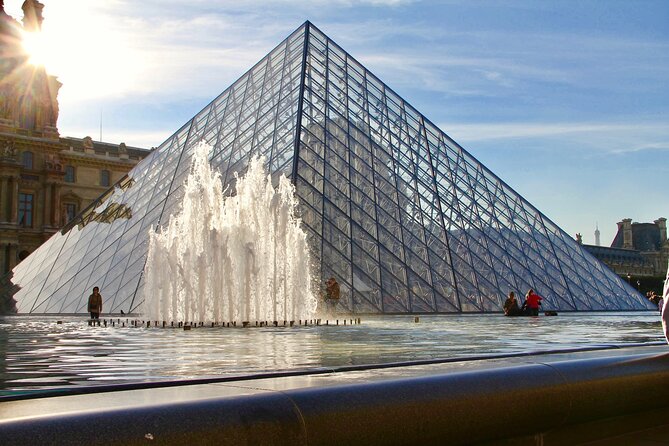
You also get views of the glass pyramid while your guide explains its mysteries. That is useful even without entry. If you later decide to go inside the Louvre, you will walk in with a framework instead of starting from zero.
One consideration: if you are hoping for a full Louvre visit during this tour, this is not that. You are doing city context and landmark orientation. That can be a great trade-off if your schedule is tight.
Arc de Triomphe du Carrousel and the Napoleon theme
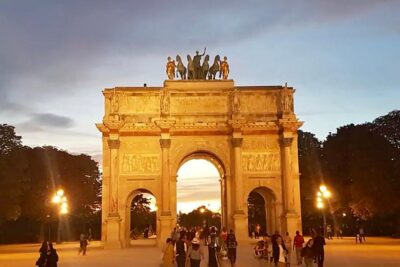
Next you see the Arc de Triomphe du Carrousel, built by Napoleon. This stop is shorter, but it fits the tour’s larger theme: Paris as a stage for power.
The guide connects the monument to Napoleon’s rise as master of Europe. Even if the arc is not as famous as the big Arc de Triomphe, the explanation makes it feel like part of the same political story.
If you want Paris to make sense fast, these “secondary” monuments are excellent because they widen your picture without demanding a long stop.
Tuileries Gardens: statues, fountains, and that Versailles-style planning
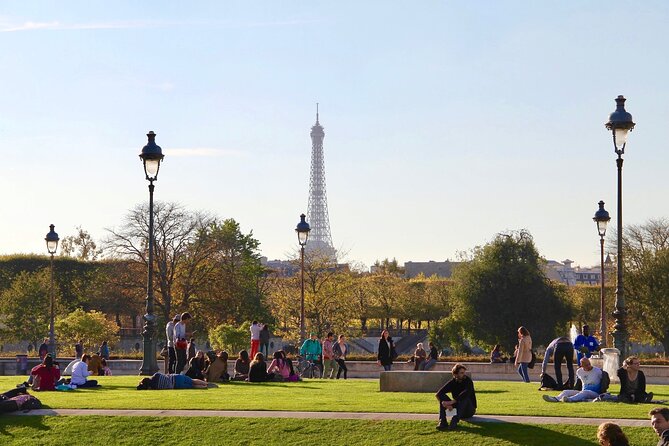
From the arc area, you head into the Tuileries. This is one of my favorite shifts in the itinerary because it turns the walk into something calmer. You get statues, sculptures, and fountains, and the guide explains that the garden design draws on landscape planning traditions linked to the artist behind Versailles gardens.
You do not need to be a garden expert. The value here is the pace change and the sense of space. After city-center density, the Tuileries makes you breathe.
It also sets up the final view. When the Eiffel Tower appears later, it will not feel random. It will feel like the last chapter of the same walking arc.
Eiffel Tower views and Gustave Eiffel’s 1889 construction story
Finally, you reach the Eiffel Tower viewpoint from the Tuileries side. The guide explains how Gustave Eiffel pulled off its construction in 1889. Even if you have seen Eiffel Tower photos a thousand times, hearing the construction story helps your brain treat it as an engineering and design achievement, not just a postcard.
This end point also makes practical sense. The tour finishes near public transportation, so you are not stuck figuring out how to escape after the walk.
One more small point that matters: this ending view is about timing. You want your last minutes to feel like a payoff, not like a scramble to catch a train. This route is built so the final leg still feels satisfying.
How the guide quality shows up in real life
The guides for this tour are clearly a big reason the reviews score so high. People highlight Michael, Daniel, and Alberto by name, and their style shows up in what they focus on.
Daniel is described as a wealth of knowledge and also helpful with practical suggestions, like a lunch recommendation. Alberto is praised for being easy to understand in English and for having strong energy. Michael gets credit for both personality and history storytelling, and even for pointing out an extra stop related to a small bookstore along the way.
Here is why that matters to you: good guides do not just repeat facts. They help you know what to do next in the city. They also make the walk easier to follow by connecting each site to the next.
If you care about clarity and energy, not just names and dates, this is a strong match.
Price and value: is $156.01 worth it?
At $156.01 per person for about 2 hours 30 minutes, the price is not low. But it can be good value if you think in terms of what you get.
You pay for a certified expert guide who connects multiple landmarks in one efficient route. You also avoid paying for a bunch of separate museum tickets during the walk, since the listed stops are described as free to access from the route, and the Louvre is not entered. That keeps your out-of-pocket costs simpler.
You also get the chance to choose a private walking tour style, meaning it is just your group. That often improves the experience because you can ask more questions and get explanations aimed at your pace.
Also worth noting: group discounts are listed. If you are traveling with friends or family, this is one of the better ways to split costs while still getting a guided experience instead of just roaming.
Timing, meeting point, and how to plan your day
You start at Cité 75004 Paris, France and end near the Tuileries Garden 75001. That end location is handy because it sits close to public transportation options, so you can keep your day moving.
Because the tour duration is about 2 hours 30 minutes, plan for the walk to eat into any ultra-tight schedule. Build in time before and after. If you are trying to cram this between two timed museum tickets, you might feel rushed.
For best results, wear shoes you can walk in for a good stretch. This is a historic center route with multiple bridges, squares, and streets where stopping for photos is easy but time adds up.
If you want a smoother day, treat this as an orientation walk. After it, you will know where you are in Paris, and you will make smarter choices for your remaining hours.
Should you book this Paris historic city center walk?
Book it if you want a fast, coherent route through the places that define central Paris: Île de la Cité, Notre-Dame, the Seine bridges, royal squares, and a strong finish toward the Eiffel Tower. It is also a great choice if you appreciate English explanations that stay clear and energetic, and if you want recommendations that help you eat and plan after the walking.
Skip it if you are mainly chasing a full museum day. The Louvre stop is about views and stories, not entry, and the tour stays focused on outdoor landmark time.
If you are on your first trip to Paris and want to feel oriented by the end of the day, this is a smart use of your time, and the guide-driven storytelling is the part that makes it feel worth it.
FAQ
How long is the Paris Historic City Center Walking Tour?
The tour lasts about 2 hours 30 minutes.
Where does the tour start and end?
It starts at Cité 75004 Paris, France, and ends very close to Tuileries Garden 75001 Paris, France.
Is this tour private?
Yes. It is described as a private tour, with only your group participating.
Does the tour include entry to the Louvre Museum?
No. The tour notes that you do not enter the Louvre during this experience.
What language is the tour offered in?
The tour is offered in English.
Are entrance fees included for the stops?
The itinerary lists admission tickets as free for the stops mentioned, so this walking route is designed around free-to-access viewing points.
Is there pickup or drop-off included?
No. The tour does not include pick-up or drop-off of guests.
Is the meeting area near public transportation?
Yes. The tour is near public transportation, and the ending point is close to metro, bus, and bike stations.
Are service animals allowed?
Yes, service animals are allowed.
What is the cancellation policy?
You can cancel for a full refund up to 24 hours before the experience starts. If you cancel less than 24 hours in advance, the amount paid is not refunded.
More Paris Walks on the List
- Paris Top Sights Half Day Walking Tour with a Fun Guide
★ 5.0 · 2,893 reviews - Montmartre Hidden Gems and Scenic Highlights Walking Tour
★ 5.0 · 2,684 reviews - Montmartre Hill French Gourmet Food and Wine Tasting Walking Tour
★ 5.0 · 2,588 reviews - Paris Île de la Cité and Notre-Dame Walking Tour With Crypt
★ 5.0 · 2,272 reviews - Paris: Montmartre Cheese, Wine & Pastry Guided Walking Tour
★ 4.8 · 2,255 reviews
Everything Else Filed Under Paris
- Paris: Louvre Guided Tour with Reserved Access & Boat Cruise
★ 4.3 · 16,353 reviews - Paris: Big Bus Hop-On Hop-Off Tour with Optional Cruise
★ 4.4 · 13,279 reviews - Louvre Museum Masterpieces Guided Tour with Access
★ 4.5 · 12,023 reviews - Versailles: Skip-the-Line Tour of Palace with Gardens Access
★ 4.7 · 9,778 reviews - Mona Lisa & Louvre Masterpieces Tour with Reserved Access
★ 4.6 · 6,812 reviews
The Whole Paris Shelf
- Paris: Louvre Museum Timed-Entrance Ticket
★ 4.6 · 71,977 reviews - Disneyland® Paris 1-Day Ticket
★ 4.6 · 49,412 reviews - Paris: Versailles Palace and Gardens Full Access Ticket
★ 4.6 · 41,579 reviews - Paris: Evening River Cruise with Music
★ 4.4 · 22,721 reviews - Paris: Eiffel Tower Entry Ticket with Optional Summit Access
★ 4.4 · 20,035 reviews
The rest of the Paris write-ups
- Montmartre: Guided Tour for Kids and Families★ 4.9 · 57 reviews
- From Paris: Versailles Palace and Gardens Guided Day Trip★ 4.5 · 57 reviews
- Versailles Palace and Garden Tour with Paris Private Transfers★ 5.0 · 58 reviews
- Louvre Evening Escape – Avoid The Crowds! Semi-Private 6ppl Max★ 5.0 · 58 reviews
- Summit Eiffel Tower Audio Guide Tour with Unlimited Time Access★ 4.5 · 58 reviews
- Private Half Day Historic Tour★ 5.0 · 58 reviews
Walking Tours, in full.
 ★ 5.0Paris Top Sights Half Day Walking Tour with a Fun GuideFrom $762,893 reviews
 ★ 5.0Montmartre Hidden Gems and Scenic Highlights Walking TourFrom $382,684 reviews
 ★ 5.0Montmartre Hill French Gourmet Food and Wine Tasting Walking TourFrom $1452,588 reviews
 ★ 5.0Paris Île de la Cité and Notre-Dame Walking Tour With CryptFrom $482,272 reviews
 ★ 4.8Paris: Montmartre Cheese, Wine & Pastry Guided Walking TourFrom $1272,255 reviews
 ★ 5.0Paris in a Day: Louvre or Orsay, Eiffel Tower, City Walk & CruiseFrom $1571,956 reviews
 ★ 4.9Paris: Montmartre Highlights Walking Tour with a Local GuideFrom $341,668 reviews
 ★ 5.0Paris City Center Free Walking Tour (Tip-Based)From $31,340 reviews
Also on these France lists